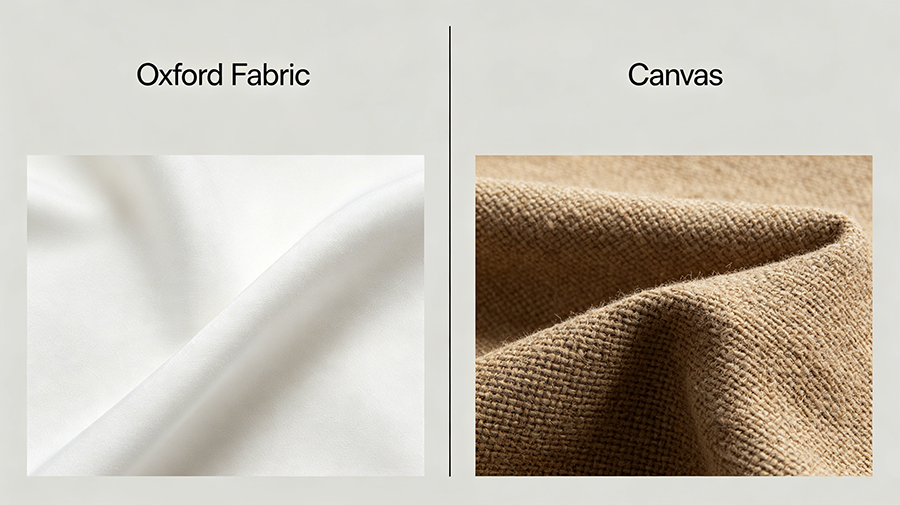
1. Raw Material Composition
Oxford fabric is predominantly produced from polyester, nylon, or polyester-cotton blended yarns. It is woven with fine single yarn threads, and pure cotton materials are seldom adopted in its production process. In contrast, traditional canvas is crafted from thick twisted cotton or cotton-flax blended strands. Though modern canvas also includes chemical fiber variants, it is always defined by thick multi-strand yarn structures that differ greatly from Oxford fabric.
2. Weight & Tactile Feel
Oxford fabric features a lightweight texture with a smooth and soft hand feel. It has diverse thickness specifications, including ultra-thin styles suitable for apparel and coated thickened versions tailored for luggage and outdoor protective supplies. Canvas belongs to heavy-duty textile materials, presenting a thick, stiff and tough touch. It boasts a far heavier weight, and distinct creases will remain on the surface after being folded or squeezed.
3. Weaving Craft & Surface Texture
The weaving method of Oxford fabric is a unique basket weave structure, which adopts double warp threads matched with single weft threads. This special craft forms delicate, tiny grid textures on the fabric surface. Canvas mainly applies plain weaving technology, with both warp and weft threads made of thick twisted strands. The thick yarn lines are clearly visible, creating a coarse and textured surface appearance.
4. Waterproof Ability & Structural Durability
Oxford fabric can achieve excellent waterproof performance after professional coating treatment. However, its inherent tear resistance is moderate, and thin Oxford fabric is prone to hook damage and tearing in harsh environments. Uncoated original canvas features high density and superior wear resistance, but it has poor water repellency and will absorb moisture to gain weight when exposed to water. After being treated with PU or PE waterproof coating, canvas obtains reliable waterproof properties and exceptional tear resistance, making it ideal for heavy-bearing and long-term outdoor use.
5. Main Application Scenarios
Oxford fabric is widely used in light and medium daily products, including luggage, backpacks, rain umbrellas, portable tents, storage pouches, casual clothing and table decorations. Canvas is favored for heavy-duty and high-strength products, such as reusable tote bags, industrial work clothes, painting substrates, outdoor sunshade awnings, truck waterproof tarps, heavy-load outdoor tents, labor protection shoes and sofa protective covers.
6. Weight & Cost Contrast
Under the same size and specification standards, Oxford fabric is lighter in overall weight and more economical in production cost, delivering higher cost performance. Canvas requires more raw materials for weaving, resulting in a heavier finished product and higher manufacturing and market prices. Quick Selection Guide For lightweight, budget-friendly daily supplies like storage bags and rain gear, Oxford fabric is the optimal choice. If you need sturdy, heavy-load and super durable materials for work apparel, outdoor shelters and heavy protective products, canvas is more suitable for long-term and high-intensity use.
Post time: Jun-26-2026


